Showing posts with label Vermont. Show all posts

Tuesday, January 13, 2026

The Lost Mural: A Burlington VT Focus of Jewish Community

Beth here, writing from Waterford, Vermont. It's been a while since I've posted here; "life happens." But with a new project underway to identify the Jewish residents of the Northeast Kingdom in 1920, I recently reconnected (with lots of conversation and joy) with Aaron Goldberg, whose primary focus in Vermont Jewish presence is on The Lost Mural. You may find some surprises, as well as plenty of information, in what he recently sent this way. Click on each panel to see it in readable size:


For further insight, browse here:

There is a vast amount of information, lectures, video,  zooms about our research on Burlington, the Lost Mural and the artist whose name is Ben Zion Black, located on the website at www.lostmural.org

I. Videos of the Move of the Mural.
You may wish to watch the time-lapse videos of the "Move of the Mural" on the website under 2015. 
The 14 minute piece on moving the mural is here:
There is another one on the same page that is about six minutes long

II. PBS Vermont Public Television Documentary.
This link is to "Burlington's Little Jerusalem" (2014). ( 1 hour)
This documentary won the Richard Hathaway Vermont History Award.
III. Quick Links: (All Lost Mural Project lectures and concerts are taped for distribution to a wider audience). 
1. History. Information about the art, architecture and history of the Lost Mural, and the genre of painted wooden synagogue is located hereHistory — The Lost Mural
2. Local High School Trip and Art. Information about the annual trips of Burlington High School to visit the Lost Mural, and their actual resistance art, is located here: Student Projects — The Lost Mural
3. Educational History Resources. Lectures, Video, and Powerpoints about the Lost Mural and the East European Painted Wooden Synagogue is located here:Resources — The Lost Mural 
4. Ben Zion Black, the Lost Mural's Artist. Information about the Black is located here:Ben Zion Black — The Lost Mural 
5. Black Yiddish Record Collection. More information about Black's Yiddish record collection is located here: Ben Zion Black Record Collection — The Lost Mural
6. Black's Yiddish Poetry. Dozens of Black's Yiddish poems have recently been translated and can be reviewed here: Ben Zion Black's Poetry — The Lost Mural
7. Testimonials. Testimonials from art, history and preservationists, as well as ambassadors and politicians from around the world can be found here: Testimonials — The Lost Mural
8. Musical Memories Concert Series. In addition to delivering information about the Jewish Community to Vermonters, the Lost Mural Project's educational mission explores the diversity of our Vermont Communities through artistic and musical presentations within a synagogue environment. These concerts highlight how culture and traditions are transmitted through art and music, and the shared experience of our immigrant journeys. 
The latest concerts are shown here on our events page: Events — The Lost Mural


Saturday, February 4, 2023

"Toll on Call": The Seven Days article on Dr. David Toll, from November 14, 2012

 Dr. Toll's obituary (appended below) missed quite a few details that this 2012 article includes. A child and grandchild of Jewish immigrants, Dr. Toll was a long-time member of Congregation Beth El in St. Johnsbury, Vermont.


Dr. David Toll: A Beloved Country Physican, by Amy Ash Nixon, Caledonian-Record, December 128, 2018


DANVILLE — A visit to Dr. David Toll’s pediatric practice was like a step back in time.

If a child was sick, you were instructed to come right in, and often Dr. Toll himself would take the phone call and talk to the child’s parent to find out what the concern was.

He had a laboratory upstairs in his building, so getting a strep test, or bloodwork done was fast and he had the results almost immediately.

Dr. Toll’s office was Norman Rockwell-esque, vintage Fairbanks scales in the patient rooms, his office itself a converted Main Street white wooden house, with toys for the kids and magazines for the parents on tables.

He was known for never turning anyone away for inability to pay.

The death of Dr. Toll, 93, over the weekend, caused many in Vermont’s rural Northeast Kingdom to offer their condolences to his family, and to share stories of what the region’s most treasured pediatrician meant to them, their children, and their lives here.

“The Kingdom has lost a friend,” shared Darcie McCann on behalf of the NEK Chamber of Commerce. “We have lost Dr. Toll.”

McCann said, “Medical professionals like Dr. Toll came from a different era, one we will never see again. It was not just the longevity of his practice but how he put his heart and soul into the tens of thousands he treated during his decades of service. Being a doctor was not just a profession to him; it was a calling. His life was truly extraordinary on how many lives he touched in his own long life.”

Sue Willey of Kirby shared, “I had a trusting love for this wonderful friend and doctor. Shared my family with him from day one of Tracy’s life (50 years ago), then Christy for 17 years and Dallas’s into college even … So so sad … love to his family and his office staff that made every visit with him pleasant. Took the girls in once when they were covered with red spots and Dr. Toll entered the room took a look from across the room, announced ‘Your cats have fleas!’ followed by a few helpful suggestions about flea terminating and grinning left the room.”

Dr. Tim Thompson of Kirby, now retired, arrived in the Northeast Kingdom in 1973 and knew Dr. Toll for many years.

The three tenants which Dr. William Osler, remembered in history for being the father of modern medicine, are what Dr. Thompson pointed to in remembering Dr. Toll and his care of children in the Northeast Kingdom – availability, affability and ability.

“David had plenty of ability, and that’s not to make it the last one, but he was amazing at being available to his patients. He had people coming from all over the Northeast Kingdom and New Hampshire to see him. It was a great testimony to his persistence, to his ability to convince people he could really take care of them. He was just a wonderful doctor here for a very long time.”

Dr. Thompson continued, “His interest was in really making sure that kids had access to care, and it’s amazing that he did that as a single practitioner. St. Johnsbury was a pretty interesting place (to choose to practice in.)”

Of Dr. Toll practicing until his 90th birthday, Dr. Thompson said, “David didn’t know what else to do. He wanted to continue being a doctor and it was really important to him. His patients were very dear to him. He was sick once and I put him in the hospital and he said, ‘I’ve got to go take care of my two patients first,’ and he went to discharge them. I couldn’t stop him.”

Dr. Thompson said Dr. Toll’s wife, Bridget “took great care of him, she was a great wife and a great caregiver.” Running a medical practice as the sole practitioner for so many years is a huge commitment and “Bridget gets a lot of credit,” for being at his side, he said.

Dr. Thompson said Dr. Toll’s work here and reputation was “why a lot of people were willing to stay here,” and make their careers in St. Johnsbury.

People adored him, and trusted him with the care of their children, he said.

He said, “David was the standard here for pediatrics … I think everybody respected his persistence and his capacity to be able to deliver care.”

Paul Bengtson, the recently retired CEO of Northeastern Vermont Regional Hospital, worked with Dr. Toll for many years. “I worked with him as a board member and sometimes president of the medical staff,” said Bengtson. “I worked with him actively for more than 30 years. He always had a very active intellect, which personally I enjoyed. He wasn’t particularly enamored of administrators, but I could roll with that because I actually could understand his point of view a lot of times.”

“He had a very long and I would say vibrant and interesting career. He enjoyed a huge following, almost like I’d never seen as a medical professional. He was a very smart diagnostician,” said Bengtson. “A lot of people would approach him I guess around the region for his ability to diagnose, particularly conditions with children.”

Bengtson said, “He is one of those people who was a legend - and he was a legend in his own time. He leaves behind a very nice, large extended family. He was very aware and smart culturally, too. One of the things I enjoyed about him was his enjoyment of classical music.” Dr. Toll also was a reader of The Book of Ecclesiastes, and he and Bengtson would discuss things from it, he said. “He knew The Book of Ecclesiastes very well,” said Bengtson. “He made many references to it.”

Toll continued to see some patients well into adulthood – even their 50s, said Bengtson.

Holly Blair of Kirby on Monday said her mother, Merrillee Blair, worked as a lab tech for Dr. Toll in the years prior to his retirement.

“He was my doctor from birth until he retired when I was 33,” said Blair, now 35. “He was such a great man … I have a million fond memories of him – which is something to be said considering I do not typically like doctors and have been sick a lot over the years. Dr Toll saw me through everything from routine childhood illness of strep throats and stomach bugs to more complicated situations like hospitalizations … (he) probably saved my life several times.”

“The world has lost so much with his passing and we were so lucky for the many years of service he gave to so many,” said Blair.

Carrie Peters of Groton on Monday said Dr. Toll took care of her four children, Torie, 22, Shelby, 21, Wyatt, who died at 15, and Luke, 12.

“When I was pregnant with Torie I was trying to decide on a pediatrician and I thought it would be neat to go to the same doctor as my husband had,” she said. “So that started our journey. Things were pretty uneventful with my girls but when my son Wyatt was born with special needs then there was lots of visits to Dr. Toll and lots of questions. Wyatt was born with Microcephaly and had all sorts of neurological problems.”

“Of course we spent lots of time at Dartmouth, but it was Dr. Toll who when I asked him how long did he think Wyatt would live to be told me ‘a teenager,’ that Wyatt’s brain would not be able to keep up with his body’s needs,” Peters said. “Oddly enough the specialists at DHMC told me many different answers – from as long as 50-60 years old to Wyatt will just keep getting pneumonia and die. In August of 2015 Wyatt passed away peacefully at 15 years old, exactly how Dr. Toll predicted, not multiple pneumonia’s, just peacefully at home with us. It still amazes me today how he knew this. And Dr. Toll and Bridget coming to Wyatt’s funeral and coming over and hugging me meant the world to me and I will never forget that.”

When her son Luke was about 5 and was admiring the sailboat pictures on Dr. Toll’s office wall, Dr. Toll invited him on a 3-day sailing trip, which Luke went home and packed for, said Peters.

Peters said, “There are many stories about how he fit us in any day no matter how busy his schedule was,” said Peters, who said she still misses his ability to diagnose what is going on with her children. “I always knew I could call, get in, and that Dr. Toll would take great care of my children.”

A celebration of life service for Dr. Toll will be held at The Creamery Restaurant in Danville from 1-4 p.m. on Friday.


Sunday, January 29, 2023

The Lyndonville Jewish Cemetery Controversy, and the St. Johnsbury Relief: Congregation Beth El

My husband Dave Kanell (1952-2019) used to talk about "institutional memory": the capacity for an organization to know and understand its past. In many ways, Dave tried to BE that set of memories for Congregation Beth El in St. Johnsbury. 

Recently I realized that the history of the Jewish burial area at Mt. Pleasant Cemetery had faded from most people around me. Dave is no longer here to tell the story, but I think these documents speak well to what happened and the flaring emotions around it.


Tuesday, December 6, 2022

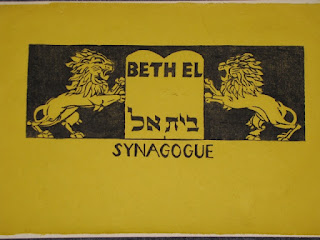
Photos from the History of Congregation Beth El, St Johnsbury, Vermont

Congregation Beth El used to meet in an upper floor of Luv's department store, across from today's Boxcar & Caboose in St. Johnsbury, Vt.


                                             From the Burlington Free Press, June 27, 1981.


Three long-term presidents of the congregation: from left, Ben Harris, Alfred Zeller, David Kanell.


                                            Art that hung in the entryway.


                            West Wall art by Chick Schwartz, on the west wall of the sanctuary.

Wednesday, November 3, 2021

David Silver, 1926-2018, and Edna Louise Silver, 1928-2018, Derby, Vermont [Obituaries]

[David and Edna Silver were vital in Congregation Beth El in the 1980s.]


This obituary for David Silver ran in the December 21, 2018, Newport Daily Express. 
 
David L. Silver, 92, Resident of Derby, Vermont, died peacefully with his family on December 17, at North Country Hospital.
    He was born in Minneapolis, Minnesota, January 29, 1926, the son of Morris and Sarah (née Niceberg) Silver. 
    David was married to his wife of 63 years Edna L. Silver on June 5, 1955 in Long Beach, California.  They have two children Morris L. Silver (b. 1958) and Claire S. Silver (b. 1964). 
    David was a Naval Pharmacist mate 3rd Class; a 1st generation American who volunteered to serve in World War II, stationed at the Naval Hospital at Guam from 1944 to 1946.
    David earned a Bachelor and Master of Science Degree in micro-bacteriology from the University of Minnesota  in 1953. From 1953 to 1979 he was a resident of Seal Beach California.  He started his professional career as a researcher under the direction of Dr. David Imagawa at the UCLA Virology Laboratory in Long Beach, California. He also worked for the Paramount Unified School District for over 25 years with a career including teaching, counseling and public administration.
    David moved to Derby, Vermont with his family in 1979. He and his wife Edna purchased the Newport Health Care Center where he served as the administrator.
    David was always close to his staff whom he loved like extended family. David was many things to many people.  He touched many and gave so much to others.
    David enjoyed the study of history, public service, and spending time with his family and friends. His heroes were Moses and Lincoln. He was a vociferous reader and enjoyed travel, photography, and men's fashion. David was involved in many community organizations including the Rotary Club, the Greater Newport Area Chamber of Commerce, Aquafest, the Vermont Symphony Orchestra, the VFW, the Masonic Lodge and Vermont Make A Wish. He also served as the President of Northeast Kingdom Mental Health Services and was a Justice of the Peace in Derby.
    David is survived by his children Morris and Tobi Silver of Benson, Vermont, Claire Silver and Namu Moulton of Derby Line, Vermont, and his grandchildren Jacob Silver and his fiancé Sarah Forster of Brookline, Massachusetts, Benjamin Silver of Waltham, Massachusetts, Emily Corbitt of Stowe, Vermont, and David Moulton of Coventry, Vermont.  
    A graveside funeral will be held at 11:00 am on December 23rd at the Hebrew Holy Society Cemetery in Burlington, Vermont.  The family wishes to express a special thanks to the staff of North Country Hospital, and members of the greater Newport health care community.
    Should you wish to honor the memory of David Silver,  in lieu of flowers, memorial donations may be made to:  
Make-A -Wish Vermont
Attention: Jamie Hathaway
431 Pine street Suite 214
Burlington, Vermont 05401

Here is the obituary for Edna Silver, published in the Newport Daily Express in the August 31/September 1, 2018, issue.


Edna Louise Silver, 90, Resident of Derby, Vermont, died peacefully surrounded by her family on August 25, at North Country Hospital.    

    She was born in Quincy, Massachusetts, July 11,
1928.
    Edna was married to David L. Silver on June 5, 1955 in Long Beach, California. They have two children Morris L. Silver and Claire S. Silver. From 1950 - 1979 she was a resident of Southern California. She worked as a Surgical Nurse, a Pediatric Nurse and Director of Nursing Services for the Beverly Manor Convalescent Center in Seal Beach California. Edna is a graduate of San Diego State College and the Mount Zion School of Nursing in San Francisco.
Edna moved to Derby, Vermont with her family in 1979. Edna and her husband David, purchased the Newport Health Care Center where she served in a variety of roles including the Director of Nursing Services.
    Edna was always close to her staff whom she viewed as her extended family. Edna was many things to many people. She touched many and gave so much to others.
    Edna enjoyed cooking, and spending time with her family and friends. Her other
passion was traveling abroad.
    She is survived by her husband David Silver, her children Morris and Tobi Silver of Benson, Vermont, Claire Silver and Namu Moulton of Derby Line, Vermont, and her grandchildren Jacob Silver and his fiancé Sarah Forster of Brookline, Massachusetts, Benjamin Silver of Waltham, Massachusetts, Emily Corbitt of Stowe, Vermont, and David Moulton of Coventry, Vermont.
    A graveside funeral was held on August 27th in Burlington, Vermont. The family wishes to express a special thanks to the staff of North Country Hospital, and members of the greater Newport health care community.
    Should you wish to honor the memory of Edna Silver, in lieu of flowers, memorial donations may be made to:
Make-A -Wish Vermont
Attention: Jamie Hathaway
431 Pine street Suite 214
Burlington, Vermont 05401

Wednesday, October 6, 2021

Jewish Community of Newport, Vermont

The late Emily M. Nelson, in her 1977 book Frontier Crossroads: The Evolution of Newport Vermont, provides the following description of the Jewish community of Newport at pages 132-133:

It was recorded by the late Morris Sockol that a Jewish community was formed in 1905 for the purpose of purchasing a Torah and observing the Jewish holidays and festivals.

Prayer meetings were held in various members' homes and Magoon's Hall was used for the High Holy Days.

In 1943 Oscar Skoll donated a building on Clyde Street to be used for a Synagogue. 

The following people were present to accept the offer: William Arkin, Abraham Arkin, Morris Atkins, Jesse Levin, Ed Needleman, Louis Needleman, Oscar Skoll, and Saul Sockol.

There was a public dedication and Open House in September, 1943, of the new Beth Israel  Synagogue. Protestants, Catholics, and Jews joined in the impressive ceremony. Rabbi Herman of Burlington, Vermont, conducted the service assisted by Cantor L. Spiro of Montreal.

Louis Lisman of Burlington delivered an address on the courage of the Newport Jews in founding a Synagogue.

The keynote address for the ceremonies was delivered by the late Rev. Wilson Bugden, pastor of the United Churches of Newport, who spoke on "Our Similarities." Pastors of the other city churches and Mayor O.S. Searles had a part in the public dedication of the new Synagogue.

Sabbath services, holiday festivals and Sunday School classes were held at the Synagogue until September, 1963. At that time the building was returned to Oscar Skill due to the diminishing Jewish population. 

The Torahs were loaned to the Ohavi Zedek Synagogue of Burlington, Vermont, for safekeeping.

In 1964 it became known to the former members of the Beth Israel congregation that a Torah was needed in a Jewish Community in India. A Torah was given and sent to India.

The funds of the treasury were used to purchase and maintain a room at the Orleans County Memorial Hospital in Newport.

The prayer books and menorah were given to Temple Beth El of Quincy, Massachusetts. The remainder of the prayer books and Torah covers were given to a new Temple in Simsbury, Connecticut, which Jason Arkin and his family helped to organize.

[The book also includes a photo, labeled: Beth Israel congregation members (from left) Saul Sockol, Louis and Ed Needleman, and Jack Gladstone, with Torah destined for a community in India.]


Tuesday, June 29, 2021

First Flight of Sam Senturia, an Airplane Mechanic During World War I

Sam Senturia, World War I

Jerome "Jerry" Senturia of Peacham shared a photo of the hand-typed description his father Sam (1896-1947) wrote about his first flight, circa 1914. Jerry wrote, "My father was an airplane mechanic in World War I. He wanted to be a pilot but his mother would not give her permission."

At the left is a photo of Sam in uniform, provided by Jerry's niece. And here is Sam's great story!

FROM DIZZY HEIGHTS: My Initial Ride in an Aeroplane


by Sam Senturia


            I shall endeavor to tell you of the sensations that I experienced on my first voyage among the clouds. This description is prompted by a request from Meyer Schickman who is helping to make my stay in Kelly Field less irksome.

            I had set my heart on getting a ride in an aeroplane, so I inquired how to get one, and was told to obtain a “form Z” and fill it out. I mustered up enough courage to go into the Office of the Office in Charge of flying and there asked the information clerk for a “Form Z.” I was greatly pleased to hear this clerk ask another, if he had any “Undertaker Blanks.” This is what the “Form Z” is commonly called because it has everything that an undertaker would want to know and then some. I took this to a quiet place and there filled it out. Here are some of the questions asked on this form: where do you want your remains sent? What religious services do you prefer? How much money have you and where is it? Have you a will and where is it? What insurance do you carry and where are the policies? This of course, put more courage into me and I filled it out bravely. I thought sure that if I went up, this information would be quite valuable to them. Now to get a pilot to take me up. When I found the pilot that I wanted he was busy talking to a friend of mine. After I had made my wishes known to the pilot, this friend of mine who happened to be the timekeeper on that stage, took the trouble to ask the pilot to be sure and give me a “good” ride. I did not grasp the full meaning of this until I had finished the ride. I borrowed a helmet and a pair of goggles from a cadet and was instructed to get in. I did this and the crew chief took the time to see that I had my safety belt hooked, this being my initial ride, and being greatly excited there was a possibility of my forgetting to take this precaution.

            After the usual Contact and Off the motor was started and we started on my first ride. On leaving the ground the feeling is that the ground is sinking under you and you are gradually rising away from it. The noise of the motor takes away most of the sensation until you get used to it. As the passenger usually rides in the front seat, I was practically on top of the motor. It took a few minutes for me to get accustomed to the noise of the motor, and then I took a look over the side. It sure is grand to be up in the air and look down on the earth, you can see for miles, and at the height we were (which I later found was 2000 feet) things are plain and easily discernable. I mentally pointed out my barracks, the place where I work, and the different places that I only [saw] from the ground before . The riding is fine, if the pilot does not feel happy and does not make the ship stand on its nose. We rode along this way and I was feeling great but Oh! what’s this, the ship is up on one wing and swinging around in a circle using the lowest wing as a pivot (I later found out that this was a spiral), when the pilot had straightened the ship out I looked back at him and smiled; this and the fact that the timekeeper had asked him to give me a “good” ride must have acted as an incentive and the first thing I knew the motor was sputtering and we were headed for the earth in the queerest manner, twisting this [way] then that (I later found that this was a tail spin) this is when a fellow gets that queer sensation that “it is all over with now,” but oh what a sigh of relief when I saw that we were again riding level. I looked back again, this time with not so much of a smile. The fact that I was still able to look back at him spurred him on and this time we nosed down and I felt the safety belt loosen so I looked UP and behold I saw the earth, this dear readers you know was a loop. As before I looked back but with no grin at all for I was having an inward battle trying to persuade what remained of my dinner to stay where it belonged, I would have won this battle by Oh! the ship tilted again and this was too much for poor little me, my hand shot up in the air as a signal that I had had enough and he must have seen that I was inspecting the inside of the ship, so he started down; at this my stomach won and out came what remained of my breakfast (the crew chief and I ought to be thankful that I did not eat any dinner that day, for if I had I would have made a little work for him and myself). We landed in a small field and the pilot told me to get out and walk around and that I would feel better. I did this and it felt good to again have my feet on Mother Earth. After about two minutes walk I told him I was ready to go back. On the return trip I rode in the rear seat and the pilot in the front seat. The pilot must have had pity on me for we rode level all the way and he even tried to cheer me by showing me some cows that had started to run when they heard the noise from our motor. I soon began to see familiar places and I knew that we would soon be back on the field. I experienced little or no sensation on landing this time for I was feeling sort of dizzy. When I got out I said to myself “Gee but it’s good to be back on the earth again.”

            I missed a dinner and part of a supper on account of this ride but I think it was worth it and a few more besides. When you consider the fact that it costs the government about two dollars a minute to fly a ship and that I had about 35 minutes of flying time I think that I could miss a couple of more rations and still be ahead.

            I hope that among you readers there may be some who have or will experience similar sensations.

            On my next trip I shall endeavor to be more entertaining and send you a regard from St. Peter himself.


Thursday, April 15, 2021

Farewell to Steve Crevoshay, April 7, 2021

 [From the Caledonian-Record obituary, April 12, 2021. See note at end.]

Steve Crevoshay died on April 7, 2021, surrounded by family. He had lived with cancer for several years but continued to enjoy life, particularly time with family, tending his prolific and beautiful garden (including the most beautiful marijuana), playing piano and recorder, singing, cooking, voluminous reading, and classic films.

Steve was born on October 12, 1944, in Boston, Mass., and grew up in a large, three-story house at 41 Hamlin Road in Newton with his parents, siblings, and maternal grandparents. The house was the site of many shenanigans, including simultaneous trumpet playing on all three floors by all three children and teenage parties that resulted in broken furniture.

Steve is best captured in his own words, through recollections and commentary written over the past year:

“With the certainty of limited time here, I enjoy not only old age, but also the pleasures, simple ones mostly, that abound, especially here in bucolic completeness. Colored as my mental wanderings are by all the new ageness absorbed over the years, and reinforced by Alan Watts’ lectures, I gladly drink in nature, clouds, sky, grass, trees, bees, flowers, birds, deer, gardens, sun & moon, all in their very own preciousness. The greatest sustenance is people. Family is my guiding star. When all is well, with everyone, as it is at the moment, I can be a satisfied lump in the easy chair, just breathing & images gliding by in my own private cinema.”

He held a number of jobs over his life. These included camp counselor, librarian of the Botany Department of the Chicago Public Library, film lackey, shoe salesman, delivery driver, picture framer, harpsichord builder, tax assessor, co-op manager, substitute teacher, and natural products salesman. The job that he used to help weave an incredible community across the Northeast Kingdom was that of owner of Newport Natural Foods in Newport, VT. He ran the store with his wife Madeleine for 28 years. He knew nearly every customer by name, and regularly provided those in need with purchases on credit. He was a mentor to many employees and fostered a community of artisans and healers through the store.

Steve also volunteered as a Little League coach and Hebrew school teacher, helped local migrant farmworkers through the Vermont Migrant Justice program, and was involved in a number of food justice efforts in the Northeast Kingdom.

Music was his great joy, beginning with piano and trumpet lessons as a child. For over 30 years, he was a tenor in the Northsong Chorus. Prior to that he was a singer with a group called the Doo Wops, performing all over the Northeast Kingdom. A particular delight was shape-note singing. He also participated in Bread and Puppet performances as a singer and Garbage Man (and, memorably, once as Bernie Sanders). Over the last 20 years he developed his skill on the recorder, and enjoyed playing Baroque music with a number of friends and family. In his last year, he began to provide video piano lessons to his granddaughter in Seattle. He was especially proud of the musical career and accomplishments of his son, Gideon, which began with the two of them singing together in the car on the way to Little League practices.

He is survived by his sister, Amrita Crevoshay, his children, Eve Crevoshay, Gideon Crevoshay, and Laila Copperansky, his partner Mariel Hess, his granddaughter Aria Edery, his son-in-law David Edery, his ex-wife Madeleine Winfield, the parents of Laila, Ruth Coppersmith and Sara Lisniansky, Mariel’s daughters Kit and Reeve and their partners, his niece Shulamit Crevoshay and nephews Avi Crevoshay and Sholem Futran, and numerous dear cousins and friends. He is predeceased by his parents, Maurice “Maish” Crevoshay and Selma Leah (Levine) Crevoshay, and by his older brother, George Crevoshay.

Steve chose to have a private green burial at his home, in keeping with his deep connection with the earth and attunement to the cycles of nature. A beloved beech tree will be planted above his gravesite at the first anniversary of his death. In keeping with Jewish tradition, the family requests that no flowers be sent. Those who wish to honor his memory may do so by planting a tree or by making a donation in Steve’s honor to reforestation or tree planting efforts locally or worldwide.

 ***

Note from the blogger, Beth Kanell: When I arrived in the Northeast Kingdom of Vermont in 1978, Steve and Maddy were members of the food coop in Newport, and I met them when I joined. I recall learning from them to wear gloves when cutting cheese (because otherwise it molded quickly), sorting out coop members' orders in heaps of small bags of nuts, beans, flour, and seeing my son Kiril learn to crawl and walk on the floor of the coop, which was then below sidewalk level, on the south side of Newport's Main Street. Soon Eve was riding in a carrier on Maddy's shoulders.

 I recall the happiness when Steve and Maddy decided to become "owners" and add store functions to the coop. I also remember taking part in a gathering to finish the fiberglass insulation for their owner-built home. It's a long time ago now. It amazes me that the counterculture habit of smoking marijuana, which was part of such gatherings "back then," has now morphed to Steve's own gardened marijuana, mentioned above.

When I met and married Dave Kanell (we met in 2001, became a couple in 2002, married in 2003), we marveled at the fact that we had not crossed paths with each other sooner, since Dave actually had spent far more time with Steve than I had -- although in an entirely different context. Dave was a long-time leader of Congregation Beth El in St. Johnsbury, appreciated Steve's teaching of Hebrew to the kids there, and had memories of Eve and Gideon growing up. Steve wasn't active in the congregation by the time I was, but I think he was still coming south once a year to the High Holiday services, perhaps with Maddy. Ozzie Henschel, whom I also met in the coop (he called my baby's feet "foozles" and snuggled him), definitely came a few more times in the early 2000s. 

 I can't close this without also saying how much of a marvel and blessing it was when Steve connected at last with Mariel, whom I knew from two other parts of my life -- working on GreenUp Day in Glover, and maintaining good health in Danville. It's very heart-affirming to see such good people find each other and savor life together. Let the circle be unbroken, by and by.

Sunday, March 7, 2021

"The Lost Mural": Videos of the Jewish Murals in Burlington, Vermont


 The Vermont Historical Society recently made these videos available. "Originally in Chai Adam Synagogue on Hyde Street in Burlington, the mural was intentionally hidden behind a false wall in 1986 when the synagogue was converted into an apartment building. It was successfully moved to Ohavi Zedek Synagogue in 2015.  The Lost Mural represents a lost genre of wooden painted synagogues that was prevalent in eastern Europe."

Video 1 is here.

Video 2 is here.

Saturday, January 23, 2021

"Nate's": Christopher Ryan Describes the Opening of This Jewish-Owned Business in 1949

[The following letter was presented by the Caledonian-Record of St. Johnsbury, Vermont, on  January 9, 2021.]

May 1949 – Nate’s Opens

To the Editor:

On Thursday night May 5, 1949, the venerable and long-missed St. Johnsbury haberdashery and shoe store, Nate’s Inc., opened for business in the Randall Block of Railroad Street in Scale City. The article in the paper of record of that afternoon noted that the third and newest Nate’s store in Vermont “will be under the management of Ben Harris, who together with his [brother] Nathan Harris of Montpelier and [his father] Hyman Harris of St. Albans, operate the group of stores. [Ben Harris] is a native of St. Albans, where he learned the clothing business in a store owned by his father. A veteran of foreign service in World War II, Mr. Harris is a member of the Montpelier Elks and Kiwanis Clubs and for the past two years has served as treasurer of Vermont Jewish Council. He is a member of St. Johnsbury Chamber of Commerce.” (“New Nate’s Inc. Opens Tonight Men’s Clothing Store Will Hold Open House – Is Third In Nate’s Vermont Chain,” The Caledonian-Record, Thur. May 5, 1949, at pp. 1-2). On Fri. Apr. 6, 1951, Nate’s relocated to 77 Railroad Street.

Over the next approximately thirty-four years, Nate’s was a popular men’s clothing destination offering, in particular, a superb, high-quality line of suits and shirts. Around town, Nate’s proprietor Ben Harris (1913-2014), his wife Rosalie, and their children Gertrude, Andrea, and Bill are/were remarkable in their deep and steadfast involvement in St. Johnsbury civic service, school activities, and in their philanthropical efforts. Among the too many to mention of these associations were The Kiwanis Club (of which Ben was a member for decades both in Montpelier and in St. Johnsbury including service as president of the St. J. chapter); the St. Johnsbury Chamber of Commerce; the Northeast Kingdom Chamber of Commerce; serving as corporators of Northeastern Vermont Regional Hospital; support of St. Johnsbury Academy and the St. Johnsbury public school initiatives/Parent Teacher Association; and in the family activity in the religious life of Temple Beth-El/Congregation Beth-El.

St. Johnsbury is a praiseworthy hometown because of the resolute support of certain individuals to the continuous betterment of town civic, commercial, educational, and philanthropic endeavors and organizations. Count the Harris family members as very prominent in that group of St. J. residents sharing that high-minded ethos of public service to others that has always been an endearing attribute of Scale City.

Christopher E. Ryan

Simi Valley, Calif.

 * *

This blog presented other material on Nate's and Ben Harris in 2014: https://jewsinvermont.blogspot.com/2014/12/nates-mens-clothiers-st-albans.html

Here's Charlie Dolgin, who grew up nearby, showing his elegant Nate's-labeled hat.


* *

I note for the sake of completeness that my late husband Dave Kanell used to talk about the founding of the Nate's clothing store in St. Johnsbury. His version involved Ben Harris being sent to the "hinterlands" of St. Johnsbury because the family felt he couldn't handle the established larger stores -- and then, of course, Ben proved his value to the community by getting to know everyone, and making Nate's in this small town a thriving concern. 

Ben and his wife Rosalie presented the face of Jewish community for decades, and their presence at community events is sorely missed.

Saturday, October 24, 2020

In the Jewish Section of Mt. Pleasant Cemetery: 3, Bill Hovey

William Lee Hovey (1932-2008): A Reflection


by Beth Kanell


Each of the five stones in the Jewish section of Mt. Pleasant Cemetery has an intriguing story behind it. But the one for William L. (Lee) Hovey may have left us with the most questions—or at least, it’s left me wondering.


I met Bill Hovey in the last years of his life. I began attending services at Beth El Synagogue with my (future) husband Dave in 2002. Bill used to come for Rosh Hashanah, when seating in the synagogue would overflow all the way into the hallway. It was a season of return, and we treasured it.


But I didn’t know what to think about Bill. Mostly I was scared of his appearance: His face and ears were heavily pierced with what looked like stainless steel studs, and his shaven head was heavily tattooed in dark navy blue or black in swirls that reminded me of Polynesian tattoos, especially because they were inked onto his face as well. His expression was solemn, and his clothing formal, like many of the other men attending services. I took my cue from Dave, who greeted Bill with some warmth and much respect, but I wondered what I was supposed to understand from his fierce appearance.


I never had the chutzpah to ask, and Dave preferred not to inquire, although he’d known Bill for years. Clearly Bill was intentionally present as a Jew. But what else was in his story?


The next time I learned a bit more about Bill was in autumn 2008, when he knew he was dying of COPD, chronic obstructive pulmonary disease. He called Dave—many people in Congregation Beth El phoned Dave when they needed something “Jewish”—and said that the Dartmouth Medical Center doctors had told him he had very little time left. “I want you to come get my books,” he said.


So Dave and I, by then married, drove to Bill’s home in the Colonial Apartments in St. Johnsbury a few days later. It was good that we arrived pretty early in the day, because the walls of the apartment were lined with bookshelves to the ceiling, jammed full, and Bill wanted us to take them all. Using “banana boxes” that we’d brought in our van, we began to take the books off the shelves and pack them. They ranged from very beautiful leather-bound volumes to ordinary paperback versions of Jewish fiction. And they were all filmed with ash from Bill’s years of cigarette smoking; his habit was so ingrained that even as we packed, and he sucked at a tank of supplemental oxygen, he still kept smoking.


We made multiple trips that day, filling the van several times. The boxed books occupied a large part of our garage by the time we finished. To my sorrow, Bill insisted that we also take with us two tallit and several kippot. He kept one for his final days. Even without the books, the apartment spoke of Jewish culture and history, with beautiful art and artifacts. Bill said he had plenty of support to help him manage, and we left him on his own there. We were sad, but determined to do our best to find good homes for the wonderful library he’d donated.


I don’t know when Bill became a Jew. I only know a few details about his life, the public details: His parents lived in Waterford, Vermont, when he was born. His father Leland Clovis Hovey was a Waterford-born surveyor, and his mother Dorothy T. (Russ) Hovey, born in Groveton NH, had worked at an art school. Leland was a descendant of Abiel Richardson, one of Waterford's significant early settlers.


Bill was probably born at the St. Johnsbury hospital, on September 13, 1932. In April 1955, when he was not yet 23 years old, he enlisted in the Navy and served a 3-year term there. He then served another 13 years in the Navy, although I can’t find any record of what he did  there. After that, he worked at the Library of Congress for a career as a linguistics specialist, with a master’s degree, and lived in and near Washington, DC. At his retirement from the Library of Congress, his position was “Romance language translator and cataloguer.” Clearly, he was a highly educated man.


Bill never married, and I have wondered whether in part his tattoos represented a declaration of who and how he had loved in his life. Even though the overall effect of the tattoos and piercings frightened me, he didn’t seem like an angry person, and on the few occasions when I saw him in downtown St. Johnsbury he was courteous, although he said little.


The local paper, the Caledonian-Record, said that Bill was survived by “a few cousins” and that the family observed a brief committal service at the Mt. Pleasant Cemetery. Dave and I weren’t aware of it at the time, so I doubt that there was any Jewish leadership present. On the other hand, the Washington Post also noted Bill’s passing, saying the service was “attended by many relatives from Hawaii, Vermont, New Hampshire, and Rhode Island.” That makes me think he may have been better known and understood by people from his long-time home area of Washington, DC.


Perhaps you know a little more about Bill or can share a photo of him. I’d like to know there are others thinking of him. Whatever the mysteries were in his life, it’s certain that he concluded with deeply Jewish connections, and his burial in the Jewish section of Mt. Pleasant Cemetery reflects that aspect of his life. The stone is a military one, provided in his honor by the US government.

[To read more local Jewish personal stories and history, browse the whole blog: https://jewsinvermont.blogspot.com]

Thursday, May 21, 2020

The Generous Life of June Solnit Sale

Aaron Solnit, MD, in his role at the Ammonoosuc Community Health Center
Aaron Solnit, a member and leader of Congregation Beth El in St. Johnsbury, Vermont, shared this reminiscence from his aunt June (née Solnit) Sale:

The present crisis [Covid-19 pandemic] and the need for medical personnel reminds me of another crisis that occurred in the 1940s. 
 
It was a time of another kind of war and many doctors and nurses were inducted into the medical corps of the army, navy and air corps, leaving hospitals in the U.S. without adequate, needed personnel. The Red Cross was given the challenge of recruiting and training citizens to provide help and back-up where it is was appropriate.
 
At that time, after the 4th election of FDR (in which I was heavily involved ) I decided to volunteer. Sam was still stationed at Minter Field, near Bakersfield, and although the sight of blood was something I tried to avoid, I decided that volunteering to be a Red Cross Nurse's Aide. It was a duty I could not turn down.
 
I was accepted for the training, along with nine other women, which was held at Kern County General Hospital. Our Trainer was a large, articulate nurse from Texas, who was clear with her instructions and her prejudices. I found myself uncomfortable with much of what she said, but happy to learn the do's and don'ts of providing much-needed services: how to bath a patient; how to assist the doctor; how to help with bed-pans, etc.
 
My moment of decision came when she told us that we didn't have to worry about bathing, or attending to patients of color (she did not use those terms). I spoke up saying things like “Doesn't every person deserve to be treated with dignity?” "What is this war being fought for?" etc. She would nod her head, roll her eyes, smile at me, as if I was some sort of nut, and continue her lecture. I talked to the recruiter about the Trainer's racism and got a smile and pat on the back.
 
I decided that I would proceed with the class and when I was finally given a schedule for work, I would ignore her racially repugnant directions. For a few months, that worked out: I treated all patients the same. Then our instructor came to review our work and she noted that I seemed to be more diligent with people of color than others. My reward was that she placed me on the prison ward where the injuries and illness were so difficult for me to face that I became ill.
 
Sam wanted me to quit. He was so kind and understanding, but me frequently throwing up ....well, you know...it wasn't pleasant. 
 
After a week or two, I was back to what was normal, and I decided to give semi-nursing another try. 
 
I talked to my recruiter and asked if I couldn't be placed at Mercy Hospital. She was not thrilled with the request, but since Mercy did need a few volunteers, she made arrangements for me to meet the nuns who were in charge of that part of the hospital. Our meeting was a wonderful relief for me. The nun in charge was sweet and kind...she welcomed me with open arms (we did not have to keep our distance then).
 
I stayed at Mercy until Sam went overseas (to Honolulu). When I came back to Los Angeles, I again volunteered and was placed at LA County Hospital in Boyle Heights. Unfortunately, I was placed in the Burn Ward......another time I would get home in time to throw up.
 
Finally (you are getting to the end of this confession), I asked if I could be placed at Children's Hospital since they were asking for volunteers. Ode to joy. I had found my place in the "war effort". I loved my work. I loved those sweet children. I loved the people I worked with. However, despite a happy ending of my "contribution" to the war effort, I now will do just about anything to stay away from hospitals...especially if they involve my health and welfare.

June was married to Sam Sale (the couple is pictured above, from some time in the 1990s), and they lived in Los Angeles. Here is Sam's obituary:

Samuel Sale II

March 23, 1921 - April 25, 2014 
 
Sam was born in St. Louis in 1921 and was the pride and joy of Julia and Frank Sale. He was the grandson of Samuel Sale, the first reform rabbi in St. Louis. He lived in many different places: Chicago, McAllen (Texas), Boston and Los Angeles, and in each of those places he made lasting friends. Sam went to Soldan High School in St. Louis and then to Wooster Academy for two years (because he graduated from high school at 15). After that it was on to his beloved UCLA, where he majored in business administration and became the sports editor of The Daily Bruin. It was there he met June and went on to become her constant support and lover until he died. In the forties, Sam volunteered for the Army Air Corps and was sent to Bakersfield's Minter Field where he became a navigation instructor. He then volunteered to go overseas and was sent to Honolulu to conduct classes for Air Force personnel on "Why We Fight". He returned to Los Angeles where he became the campaign manager for Gordon Williams for state assembly. After a disappointing loss, Sam joined his father-in-law, Ben Solnit, in the wholesale shoe business. They truly loved, admired and respected each other and Ben's death was a big blow to Sam. After many successful years in the shoe business, at 65 Sam decided that was not what he wanted to do with the rest of this life, so he concentrated on volunteering, sailing, handball, racketball at the "Y" and senior classes. He especially enjoyed going to the Pasadena Senior Center with his college classmate and dear friend, Lester Buhai. There, again, he made new and lasting friendships. Sam was a mensch who would get to know the stories of everyone he met. He was outgoing and full of fun, yet serious and concerned about those who were unable to fully participate in this rich world. He worried about the future for his children, grandchildren and great-grandchildren. Climate change, discrimination and the many wars in which we have been engulfed were a constant worry. He has left a rich legacy for the world: June, his loving wife of more than 70 years, Laurie Sale and Norman Josephs, Nancy Sale and Bleu, and Josh Sale and Peggy Curran, Jorge Flores and Jill Teitelbaum, Aaron Flores and Jordanna Flores and great grand-children Luca, Maddox, Shira and Reuben Flores. He is also survived by his sister, Betsy Singer. The family wants to especially thank Jeffrey Medina, who has been his other son and caregiver for over three years, as well as Edgar Toletino and Alex Gueverra, who were with Sam to the very end. Services will be held at Hollywood Forever Cemetery at 6000 Santa Monica Boulevard at 1:00 p.m. on Sunday, April 27, with a reception to follow. In lieu of flowers donations may be made to Southern Poverty Law Center (splcenter.org), LA's BEST (labest.org), Stone Soup (stonesoupchildcare.org) or Court Appointed Special Advocates (casaforchildren.org). GO BRUINS!

[Published in the Los Angeles Times from Apr. 26 to Apr. 27, 2014.]
 
Aaron also provided a second set of June's recollections, in this article originally published in the Jewish Journal:
 
In November 1943, June Sale, a UCLA student, was part of a demonstration at Los Angeles Polytechnic High School against Gerald L.K. Smith, the most prominent anti-Semite of the time.

Listening to the speeches inside the auditorium, she recalled recently, “I became nauseated and teary. I decided to leave.  As I got to the foyer of the auditorium, a police officer arrested me, told me I was disturbing the meeting and walked me to the police paddy wagon.”

I learned of her long-ago bust in one of the emails she sends to friends, often writing of her anger over where President Donald Trump is taking the country. I was intrigued by the story of her arrest, and by the picture she included of herself talking to her lawyer before going on trial, which appeared in the now-defunct Los Angeles Daily News (the one that folded in 1954, not the current Woodland Hills-based newspaper). I wanted to know more. So my wife, Nancy, and I talked with her early in April over lunch at her home above Sunset Boulevard. We have been friends since we met June and her late husband, Sam, on Barbara Isenberg’s London theater tour several years ago.

As she told the story of her life, I saw that it reflected an almost forgotten era of Jewish Los Angeles, when anti-Semitism was rampant and a beleaguered Jewish community pondered how to fight it. “It was just something that happened to me over and over again,” she recalled of the anti-Semitism of her high school days in Pasadena.

June was born at White Memorial Hospital in Boyle Heights in 1924. Boyle Heights was then home to immigrants of many ethnicities and a hotbed of Jewish progressive politics.  Her parents, Ben and Bertha Solnit, were immigrants from a town on the Russian-Polish border. Ben learned the shoe business from the bottom up and grew prosperous. When their son was ill with bronchitis, his pediatrician advised them to move to a hotter, drier place. They chose Sierra Madre, near Pasadena, a center for right-wing politics and one of several communities riddled with anti Semitism.

Although Jews were among the founders of Los Angeles in the 19th century, Midwesterners who made the growing city a white Protestant conservative place soon outnumbered them. Restrictive covenants kept Jews — and African-Americans, Asians and Latinos — from some neighborhoods. Clubs would not admit Jews nor would fancy downtown law firms hire them.

In high school, June said, “all my friends who were not Jewish joined sororities and they were told not to talk to me.”   When she was elected president of a student YWCA group in junior high school, a vice principal said she could not accept the job because the group recited Christian prayers and Jews could not join them.

The Solnits wouldn’t take it. “I’m a better citizen then you’ll ever be,” Bertha Solnit told another school vice principal when he refused to permit June to use transfer credits to graduate and lectured Bertha on what he considered the citizenship obligations of immigrants. 

Their determination to fight anti-Semitism, as well as their liberal political views, put the Solnits firmly in the ranks of pro-labor, progressive Jews — usually immigrants or children of immigrants. They were at odds with more politically conservative Jews who wanted to get along with the city’s Republican powers and didn’t approve of the liberal activists’ confrontational tactics with anti-Semites. 

June accompanied her father to meetings of the Joint Anti-Fascist Refugee Committee, which was helping anti-Franco forces in the Spanish Civil War and campaigning to rescue Jews and other victims of Hitler. President Harry S. Truman’s Justice Department later blacklisted the committee, an action overturned by the Supreme Court.

“The grown-ups were passionate, worried and concerned,” June wrote of the meetings. “The discussions were often difficult for me to comprehend, but I do remember the point of the gatherings was to find ways to bring refugees from Spain and Europe to safety. [President Franklin] Roosevelt had turned away Jews trying to escape the Holocaust and refugees from Spain were not welcome here.”

Liberal outrage was intense when Gerald L.K. Smith spoke at Poly High in 1943. Sam and June had married and he was overseas with the Army Air Corps. June, still at UCLA, had been on a union picket line during a strike against the studios. Impressed with her demeanor, one of the strike captains, a man named Irving, asked her to join a labor-sponsored demonstration against Smith.

After her arrest, she said, “I was greeted in the paddy wagon by other ‘disturbers’ and we were whisked off to jail. The women were placed in cells with prostitutes who had been arrested. Irving had observed my arrest and soon came to my rescue. He was able to pay my bail and I was released early in the morning. Believing I would be the first person out of the dungeon, I took everyone’s phone number on a piece of toilet paper (the guard loaned us a pencil) so I could call a contact and tell what had happened.”

All of the charges were dismissed. “The police were required to identify us and they couldn’t,” she wrote in an email. “Strangely enough, we all looked quite different from the time we were arrested.”
She concluded her email about her arrest by saying, “You may ask why I bring this moment in my history up at this time. Well, I think we are headed for rough and difficult times as we face the Trump years. America First was a theme of the thirties, anti-Semitism is on the rise, the rich are getting richer, the middle class is disappearing and the poor are getting poorer. We must organize against this growing threat of ‘America First.’ ”

June graduated from UCLA. She and Sam raised a family and generously supported progressive causes, no matter how unpopular. She became a preschool teacher, started Los Angeles’ first Head Start program and was in charge of child care services at UCLA for 10 years. Then for 18 years, she was a court-appointed special advocate, going from court to court, home to home, looking after the welfare of some of the 35,000 children in the Los Angeles County foster care program.

“When you get old, gray and sleepless, you may find, as I do, that your memories of days gone by keep you company,” she wrote.

Her memories keep us company, too. The issues have changed. The immigrants are no longer Jewish refugees, but Latinos and those fleeing war-torn Muslim-majority nations. Episodes of anti-Semitism are increasing. But the challenges remain the same as they were when June Sale joined the picket line at Poly High.


BILL BOYARSKY is a columnist for the Jewish Journal, Truthdig and L.A. Observed, and the author of “Inventing L.A.: The Chandlers and Their Times” (Angel City Press).

It's intriguing that none of the preceding material mentions that June Solnit Sale was also an author. She was the lead author for The Working Parent's Handbook (1996), pictured here; contributed to Child Care and the Family (1984); and wrote Child Care Services: A Guide for Colleges and Universities (1993). With her daughter Laurie, she also wrote blog items on grandparenting.